Papillary thyroid cancer (PTC) accounts for ~80–85% of all thyroid cancers. It is also the subtype with the best overall prognosis.
🧠 Key characteristics of PTC
Typically slow-growing Often diagnosed at an early stage May spread to neck lymph nodes, especially in younger patients Even with lymph node involvement, long-term survival remains excellent
🔍 How is PTC usually detected?
Incidentally on high-resolution ultrasound Confirmed with ultrasound-guided FNA biopsy Often small tumors (≤2 cm) at diagnosis
⚖️ How is papillary thyroid cancer treated?
Treatment is risk-adapted and may include:
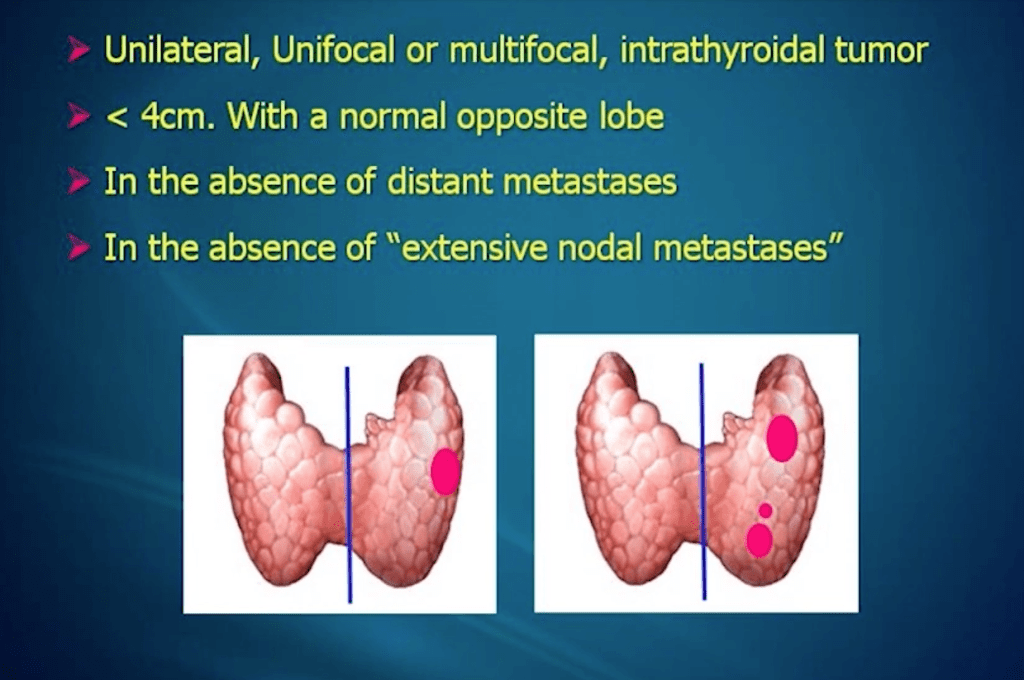
Active surveillance for selected very low-risk tumors Thyroid lobectomy for low-risk disease Total thyroidectomy for higher-risk cases Selective lymph node surgery when indicated Radioactive iodine only for patients who truly benefit
➡️ Not all patients need the same treatment.
📈 Prognosis
10-year survival >95% Many patients live normal lifespans Focus is increasingly on quality of life, not just cure
👨⚕️ Dr. Rodrigo Arrangoiz, MD
Surgical Oncologist – Thyroid, Head & Neck, Breast
Mount Sinai Medical Center
📌 Take-home message:
Papillary thyroid cancer is common, highly treatable, and often requires less aggressive treatment than patients expect.
📚 References
Haugen BR et al. ATA Guidelines for Differentiated Thyroid Cancer. Thyroid Tuttle RM et al. Risk-adapted management of papillary thyroid cancer. Lancet Diabetes Endocrinol SEER Cancer Statistics Review
My name is Rodrigo Arrangoiz I am a breast surgeon/ thyroid surgeon / parathyroid surgeon / head and neck surgeon / surgical oncologist that works at Center for Advanced Surgical Oncology in Miami, Florida.
I was trained as a surgeon at Michigan State University from (2005 to 2010) where I was a chief resident in 2010. My surgical oncology and head and neck training was performed at the Fox Chase Cancer Center in Philadelphia from 2010 to 2012. At the same time I underwent a masters in science (Clinical research for health professionals) at the University of Drexel. Through the International Federation of Head and Neck Societies / Memorial Sloan Kettering Cancer Center I performed a two year head and neck surgery and oncology / endocrine fellowship that ended in 2016.
Mi nombre es Rodrigo Arrangoiz, soy cirujano oncólogo / cirujano de tumores de cabeza y cuello / cirujano endocrino que trabaja Center for Advanced Surgical Oncology en Miami, Florida.
Fui entrenado como cirujano en Michigan State University (2005 a 2010 ) donde fui jefe de residentes en 2010. Mi formación en oncología quirúrgica y e n tumores de cabeza y cuello se realizó en el Fox Chase Cancer Center en Filadelfia de 2010 a 2012. Al mismo tiempo, me sometí a una maestría en ciencias (investigación clínica para profesionales de la salud) en la Universidad de Drexel. A través de la Federación Internacional de Sociedades de Cabeza y Cuello / Memorial Sloan Kettering Cancer Center realicé una sub especialidad en cirugía de cabeza y cuello / cirugia endocrina de dos años que terminó en 2016.
View all posts by Rodrigo Arrangoiz MS, MD, FACS, FSSO


 Rodrigo Arrangoiz MS, MD, FACS, FSSO