
Thyroid Cancer Staging (Simplified for Patients)
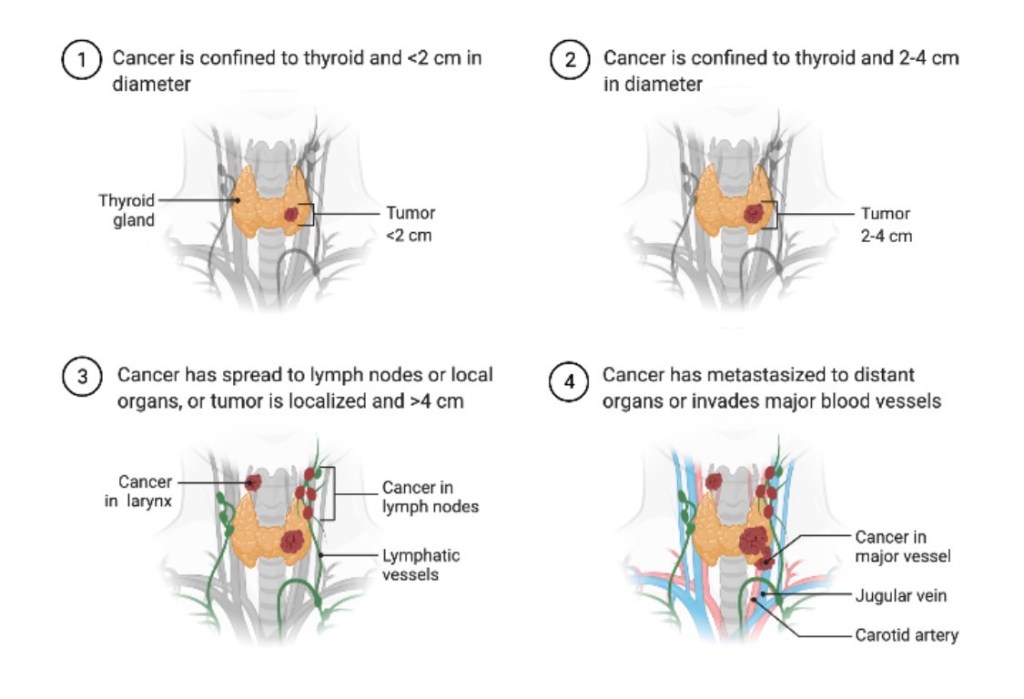
Staging describes how far a cancer has spread. In thyroid cancer, staging helps guide treatment intensity and follow-up, but it’s important to know that most patients do very well regardless of stage.
🧠 What factors are used to stage thyroid cancer?
The AJCC staging system considers:
Tumor size and whether it extends beyond the thyroid Lymph node involvement in the neck Distant spread (lungs or bones—uncommon) Age (patients under 55 are staged differently and typically have an excellent prognosis)
📊 What do the stages mean?
Stage I–II: ✔️ Most common ✔️ Often confined to the thyroid or nearby lymph nodes ✔️ Excellent long-term survival Stage III–IV: ✔️ Less common ✔️ More extensive local disease or distant spread ✔️ Still often highly treatable with modern, multidisciplinary care
⚖️ A key clarification for patients
Stage is not the same as risk of recurrence.
We also use ATA risk stratification to estimate the chance of the cancer returning and to tailor:
Extent of surgery Use of radioactive iodine Intensity of follow-up
🦋 Why this matters
Staging helps us:
Avoid overtreatment in low-risk patients Focus resources on patients who truly need more intensive therapy Provide accurate reassurance and individualized care
👨⚕️ Dr. Rodrigo Arrangoiz, MD
Surgical Oncologist – Thyroid, Head & Neck, Breast
Mount Sinai Medical Center
📌 Take-home message:
In thyroid cancer, stage helps guide care—but prognosis is excellent for the vast majority of patients.
📚 References
AJCC Cancer Staging Manual, 8th Edition Haugen BR et al. ATA Guidelines for Differentiated Thyroid Cancer. Thyroid Tuttle RM et al. Risk-adapted management of thyroid cancer. Lancet Diabetes Endocrinol

 Rodrigo Arrangoiz MS, MD, FACS, FSSO