


- Based on the classic paper by Norris and others:
- The development of the parathyroid glands in humans can be divided into five stages:
- Preprimordial stage
- Early primordial stage
- Branchial complex stage
- Isolation stage
- Definitive form stage
- The development of the parathyroid glands in humans can be divided into five stages:
- The preprimordial stage:
- Indicates the period between the formation of the pharynx and the earliest appearance of a recognizable parathyroid anlage:
- During this stage, at 4 mm to 8 mm in length:
- The third and fourth pharyngeal pouches show a slight dorsal extension.
- The third pouch:
- Which has the form of a tubelike lateral expansion of the primitive pharynx:
- Makes contact with the ectoderm of the pharyngeal cleft and then continues its growth in a downward and ventral direction.
- Which has the form of a tubelike lateral expansion of the primitive pharynx:
- During this stage, at 4 mm to 8 mm in length:
- Indicates the period between the formation of the pharynx and the earliest appearance of a recognizable parathyroid anlage:
- The early primordial stage:
- When the embryo is about 9 mm in length:
- The parathyroid tissue can be recognized
- Proliferation and differentiation of large, clear cells occur in the third and fourth pouches:
- Resulting in:
- A thickening of the third and fourth pouches
- Formation of a budlike nodule of the fourth pouch
- Resulting in:
- When the embryo is about 9 mm in length:
- The branchial complex stage:
- The derivatives of the third and fourth pharyngeal pouches become separated from each other to reach independent positions.
- During the early phase of this stage:
- The pharyngeal pouches are still joined to the primitive pharynx by pharyngobranchial ducts:
- These latter, subsequently, narrow and finally divide:
- Which determines the definitive separation of the third and caudal pharyngeal complexes from the primitive pharynx.
- These latter, subsequently, narrow and finally divide:
- At the beginning of this stage:
- The primordial thymus and PIII are intimately joined:
- Subsequently, the thymus begins a period of rapid ventral growth:
- Until the lower pole comes in contact with the pericardium.
- On the other hand, the growth of the PIII is not as rapid, and it remains a budlike projection from the superior end of the thymus cord.
- Finally, it takes a sphere shape, intimately attaching to the upper pole of the thymus cord.
- Subsequently, the thymus begins a period of rapid ventral growth:
- The position of the caudal pharyngeal complex in relation to the median anlage of the thyroid depends on:
- Changes in form, size, and position of the rapidly growing lateral lobe of the median thyroid.
- During this stage, the PIV rudiment is still attached to lateral thyroid body.
- When the embryo is 13 mm to 14 mm long, the PIII and PIV migrate together with the thymus and ultimobranchial bodies, respectively.
- Because of the extension of the cervical spine and the descent of the heart and great vessels:
- The complex derived from the third branchial (parathymus) is drawn toward the superior mediastinum and, thus:
- Migrates in a medial and caudal direction through the entire length of the embryonic neck to reach its final position, and separation of the PIII from the thymus begins.
- The complex derived from the third branchial (parathymus) is drawn toward the superior mediastinum and, thus:
- The PIV follows the thyroid migration of the ultimobranchial bodies, which travel toward the lateral part of the main median thyroid rudiment:
- Their descent in the neck is thus relatively limited.
- They remain in contact with the posterior part of the middle third of the thyroid lobes.
- The primordial thymus and PIII are intimately joined:
- The complex branchial stage ends when the embryo is approximately 18 to 20 mm in length.
- The pharyngeal pouches are still joined to the primitive pharynx by pharyngobranchial ducts:

- The isolation stage:
- Is characterized by the separation of the parathyroid rudiments (PIII and PIV) from the other elements of the third (the thymus) and of the caudal pharyngeal complexes (the ultimobranchial bodies), respectively.
- The isolation of the parathyroid glands is usually accomplished when the embryo is 20 mm in length.
- After completing the descent through the neck:
- The PIII increases in size and separation from the thymus occurs, because of cephalic regression of the last.
- PIII is thus abandoned at the level of the anterior or posterolateral region of the inferior poles of the thyroid lobes, or at the level of the thyrothymic ligaments, vestigial structures indicative of their former connections.
- The two elements of the caudal pharyngeal complex also grow separately and are conjoined by a connecting stalk:
- The interruption of this stalk, determining the isolation of the PIV, occurs once the lateral and the median thyroid become incorporated.
- The final position of the PIV in relation to the thyroid gland is determined by the place at which the inclusion of the ultimobranchial body (lateral thyroid element) occurs.
- The definitive form stage:
- Indicates the period from the end of the isolation to the time when the parathyroids assume their definitive form.
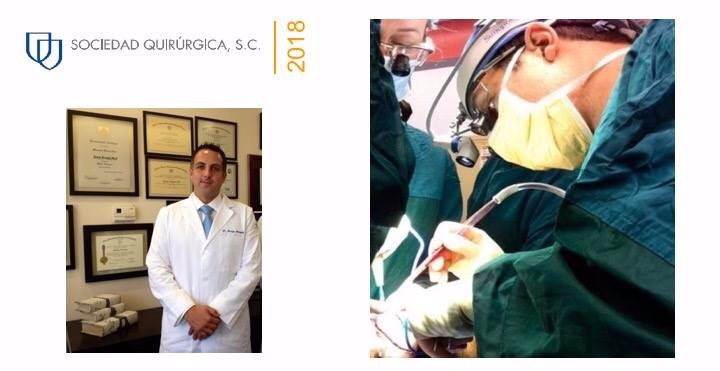
Rodrigo Arrangoiz MS, MD, FACS a head and neck surgeon / endocrine surgeon / surgical oncologist and is a member of Mount Sinai Medical Center:
-
He is an expert in the management parathyroid diseases.
-
Publication on parathyroid embryology and anatomy:
-
Parathyroid Embryology, Anatomy, and Pathophysiology of Primary Hyperparathyroidism:
-
Arrangoiz, R., Cordera, F., Caba, D., Juárez, M.M., More- no, E. and Luque, E. (2017) Parathyroid Em- bryology, Anatomy, and Pathophysiology of Primary Hyperparathyroidism. International Journal of Otolaryngology and Head & Neck Surgery, 6, 39-58.https://doi.org/10.4236/ijohns.2017.64007
-
-
Training:
• General surgery:
• Michigan State University:
• 2004 al 2010

• Surgical Oncology / Head and Neck Surgery / Endocrine Surgery:
• Fox Chase Cancer Center (Filadelfia):
• 2010 al 2012

• Masters in Science (Clinical research for health professionals):
• Drexel University (Filadelfia):
• 2010 al 2012

• Surgical Oncology / Head and Neck Surgery / Endocrine Surgery:
• IFHNOS / Memorial Sloan Kettering Cancer Center:
• 2014 al 2016

#Arrangoiz
#Teacher
#Surgeon
#Cirujano
#ThyroidExpert
#ThyroidSurgeon
#CirujanodeTiroides
#ExpertoenTiroides
#ExpertoenParatiroides
#Paratiroides
#Hiperparatiroidismo
#PapillaryThyroidCancer

 Rodrigo Arrangoiz MS, MD, FACS, FSSO