

👉Radial scar, a complex sclerosing ductal lesion of the breast, is a common high-risk lesion, noted to occur in 28% of women at autopsy.
👉This lesion, which can be multicentric in 44% of cases, often presents as suspicious lesions on standard imaging, mimicking invasive cancer.
👉These can be confused histologically with scirrhous or tubular carcinomas of the breast, but there is greater reproducibility in its diagnosis by pathologists when compared with other high-risk epithelial lesions.
👉Meanwhile, molecular assessment so far has not provided much practical insight.
👉It has long been known that a substantial proportion of radial scar lesions detected on needle biopsy will be upgraded to cancer.
👉Numerous series have found an association with either DCIS or invasive breast cancer on excision and demonstrate a likelihood of finding malignancy in approximately 9% to 40% of cases.
👉There has been much controversy over the association between radial scar and the presence or development of breast cancer.
👉In a case-control study from a single institution of 1,396 women from whom radial scars were identified in 99 individuals, the risk of breast cancer development was 1.8 times that of controls, whereas the presence of radial scar in association with other lesions, such as proliferative disease without and with atypia, increased a woman’s risk three- to sixfold.
👉In a second series of 9,556 women, among whom 880 (9.2%) had radial scar, the risk of breast cancer was 7.0% over 20.4 years of follow-up compared with 5.5% of controls.
👉In one recent study of 292 core biopsies showing radial scar, 75% were a pure radial scar, and only one had DCIS.
👉Six other patients had a malignancy, but these were found in association with ADH or lobular neoplasia, suggesting that not all radial scars require excision.
👉Multiple other studies have similarly suggested that in the absence of concurrent high-risk lesions, radial scar may not require excision, although radial scar is only rarely found without concurrent proliferative disease present.
👉Nevertheless, standard practice at this time still remains excision to rule out malignancy at the site of a radial scar found on core biopsy.
👉This is most likely out of an abundance of caution because predictors of malignancy are still being investigated, and observational series remain small, with little follow-up.


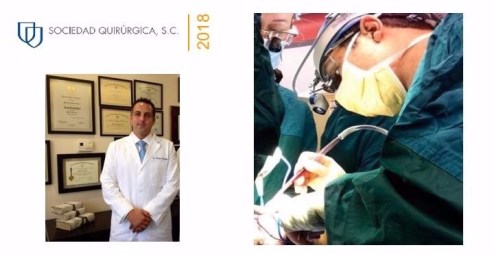
 Rodrigo Arrangoiz MS, MD, FACScirujano oncology y miembro de Sociedad Quirúrgica S.C en el America British Cowdray Medical Center en la ciudad de Mexico:
-
Es experto en el manejo del cáncer de mama.
Training:
• General surgery:
• Michigan State University:
• 2004 al 2010

• Surgical Oncology / Head and Neck Surgery / Endocrine Surgery:
• Fox Chase Cancer Center (Filadelfia):
• 2010 al 2012

• Masters in Science (Clinical research for health professionals):
• Drexel University (Filadelfia):
• 2010 al 2012

• Surgical Oncology / Head and Neck Surgery / Endocrine Surgery:
• IFHNOS / Memorial Sloan Kettering Cancer Center:
• 2014 al 2016


 Rodrigo Arrangoiz MS, MD, FACS, FSSO