Anaplastic Thyroid Carcinoma (ATC)

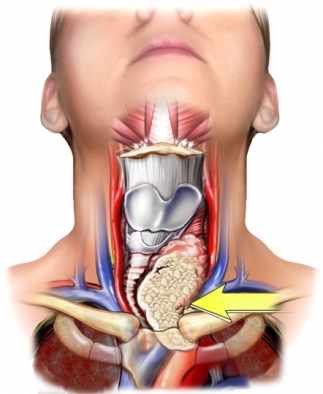
anaplastic thyroid cancer

Etiology and Pathogenesis

  • Anaplastic thyroid carcinoma (ATC) accounts for 1.7% of all thyroid malignancies in the United States. 
  • Women are more commonly affected than men.
  • The majority of tumors are present in the seventh and eighth decades of life.
  • It has a very poor prognosis:
    • Median survival of 5 months.
    • 1-year survival of 20%.

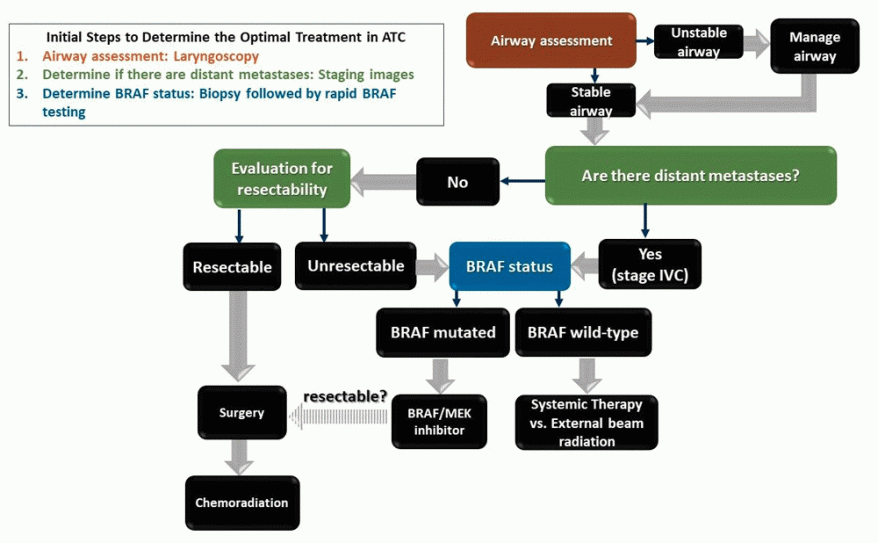
8fb25e2b-e511-4643-a84b-fe9b1b6180fd_figure3

  • ATC is typically thought to originate due to dedifferentiation of more differentiated thyroid cancers of follicular cell origin:
    • Up to 80% of ATCs occur in patients with preexisting goiters:
      • The process of dedifferentiation is complex and often involves changes in various chromosomal regions affecting cell cycle and other signal transduction pathways:
        • Several genes are known to be mutated in ATCs and include:
          • p53 (50% to 80%)
          • BRAF (20% to 40%)
          • RAS (20% to 40%)
          • PI3KCA (10% to 20%)
          • PTEN (5% to 15%)
          • AKT1 (5% to 10%)
          • CTNNB1 (5% to 60%). 

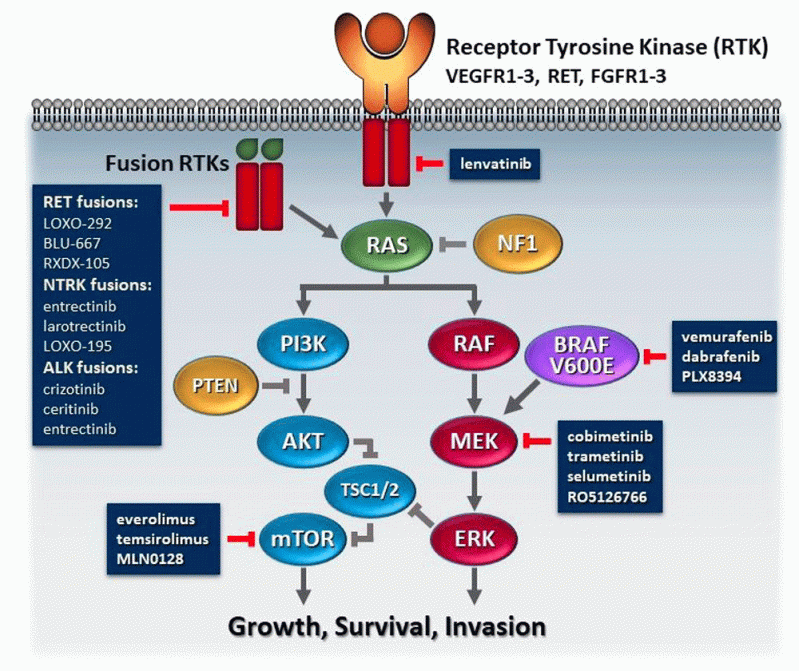
8fb25e2b-e511-4643-a84b-fe9b1b6180fd_figure2

  • Although some gene mutations are also commonly found in differentiated thyroid cancers (BRAF and RAS):
    • p53 tumor suppressor gene mutations are almost exclusively found in ATC.
      • Suggesting that they occur late in the dedifferentiation process.
  • BRAF V600E mutations lead to constitutive activation of the MAPK pathway:
    • Resulting in tumor growth and reduction in the expression of the sodium-iodide symporter, which correlates with resistance to radioactive iodine (RAI) therapy.
  • PIK3CA mutations result in aberrant activation of the PI3K/Akt/mTOR pathway and are found in more than 50% of ATCs and lead to increased growth.
  • AKT1 (5% to 10%) mutations in particular also lead to resistance to conventional chemotherapeutic agents:
    • PTEN mutations also affect this pathway
  • CTTNB1 encodes β-catenin:
    • A key member of the Wnt signaling pathway:
      • Causes tumor progression.
  • Two ATC-specific mutations in the anaplastic lymphoma kinase gene lead to dual activation of the MAPK and PI3K/Akt pathways:
    • Which leads to multilayer and anchorage-independent tumor growth.
  • Several microRNAs have also been reported to be dysregulated in ATC:
    • These include both upregulation (miRNA 222, 221, 146B, 106, 17 to 92) and downregulation (miRNA 618, 138, 125B, 30d, 26a)


Rodrigo Arrangoiz MS, MD, FACS cirujano de tumores de cabeza y cuello / cirugia endocrina miembro de Sociedad Quirúrgica S.C. experto en el manejo del cáncer de tiroides.

  • Cumple con los requisitos determinados por el Dr. Ashok Saha para realizar cirugía de tiroides de manera efectiva y segura:

Entrenamiento:

  • Cirugia general y gastrointestinal:

• Michigan State University:

• 2004 al 2010image-48

• Cirugia oncológica / tumores de cabeza y cuello / cirugia endocrina:

• Fox Chase Cancer Center (Filadelfia):

• 2010 al 2012

image-39

• Maestria en ciencias (Clinical research for healthprofessionals):

• Drexel University (Filadelfia):

• 2010 al 2012image-50

• Cirugia de tumores de cabeza y cuello / cirugiaendocrina

• IFHNOS / Memorial Sloan Kettering Cancer Center:

• 2014 al 2016

image-51

http://www.sociedadquirurgica.com

http://www.hiperparatiroidismo.info

http://www.cirugiatiroides.com

#Arrangoiz

#CirugiadeTumoresdeCabezayCuello

#CirugiaEndocrina

#CirugiaOncologica

#HeadandNeckSurgery

#EndocrineSurgery

#SurgicalOncology

Leave a comment