
-
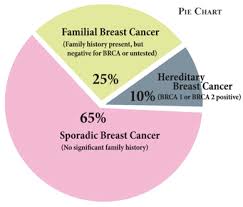
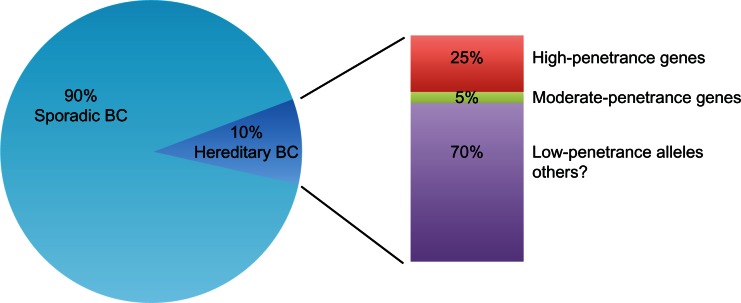
When talking about genetics and breast cancer, physicians typically first discuss risk factors associated with mutations in the tumor-suppressor genes BRCA1 and BRCA2, as these mutations represent most of the hereditary types of breast cancer.
-
Patients with either of these mutations have a 47% to 87% lifetime risk of developing breast cancer
-
-
Among families with a history of multiple breast cancers, 7% have BRCA-1 mutations.
-
For families with a history of breast and ovarian cancers, BRCA-1 mutations are present in 40%.
-
BRCA mutations greatly increase a patient’s risk of developing ovarian cancer and are associated with a lifetime risk of 40%.
-
Similarly, BRCA2 mutations confer an increased risk of both breast and ovarian cancer:
-
In families at high risk for these cancers, 10% to 20% carry a BRCA-2 mutation.
-
-
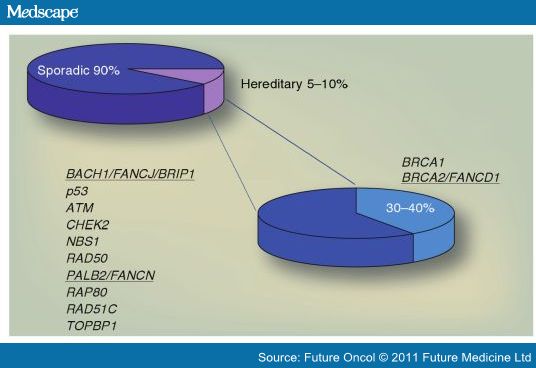
In addition to BRCA-1 and BRCA-2 gene mutations, other genes and syndromes are associated with an increased risk for breast cancer:
-
The HER2 gene, also referred to as neu or ERBB2 (receptor tyrosine-protein kinase erbB-2), codes for a transmembrane tyrosine kinase receptor, a member of the epidermal growth factor receptor (EGFR) family:
-
When activated, this receptor family causes an increase in activity of molecular pathways associated with tumor growth and progression:
-
Gene amplification at chromosome 17q (Chr17q) involves the HER gene and is observed in about 10% to 15% of breast cancers:
-
This percentage is lower than the rate (20% to 25%) reported in historical studies, in which different diagnostic thresholds were used:
-
Chr17 polysomy could also have led to discordant interpretations between high signals due to polysomy and those due to an absolute increase of HER2 gene copy number.
-
HER2 amplification is an adverse prognostic factor associated with:
-
An increased metastatic potential and reduced survival and is a predictive factor of response to anti-HER2 therapy.
-
-
-
-
-
-
Other genes at this locus on CHr17q (MED1, STARD3, GRB7, THRA, RARA, IGFBP4, CCR7, KRT20, KRT19, and GAST) might also be amplified and could play functional roles in breast cancer development and progression.
-
-
A 2007 study showed that US women of Ashkenazi Jewish descent have the highest prevalence of the BRCA1 mutation, at 8.3%.
-
The variable prevalence of BRCA1 mutation in other racial and ethnic groups in the United States is as follows:
-
Hispanic American women: 3.5%
-
Non-Hispanic American white women: 2.2%
-
African American women: 1.3%
-
Asian American women: 0.5%
-
-
Independent of BRCA status, Ashkenazi Jewish women have double the baseline risk for breast cancer:
-
It is estimated that 2.5% (1:40) patients of Ashkenazi Jewish descent carry one of the three BRCA1 or BRCA2 founder mutations:
-
185delAG, 538insC in BRCA1; 6174delT in BRCA2.
-
-
-
Li-Fraumeni syndrome (LFS) is a rare genetic cancer syndrome associated with mutations of tumor-suppressor gene TP53:
-
Which is inherited in an autosomal dominant pattern.
-
Together, male and female patients with LFS have a 50% risk of developing cancer by age 40 years and a 90% risk by age 60 years.
-
Female patients with LFS have almost a 100% lifetime risk of developing cancer:
-
They also have a 56% risk of developing breast cancer by age 45 years, and a more than 90% risk by age 60 years:
-
Most breast cancers are diagnosed in patients younger than age 40 years.
-
-
Patients with LFS also have rates of bilateral breast cancer approaching 25%.
-
-
LFS is also associated with cancers of other sites:
-
Including brain cancer, leukemia, soft-tissue sarcomas, and adrenocortical cancer.
-
-
-
Cowden disease (CD) is a rare genetic syndrome caused by mutations in the PTEN gene (phosphatase and tensin homolog):
-
Patients with CD have a lifetime risk of developing breast cancer that ranges from 25% to 50%.
-
CD is commonly associated with several benign breast abnormalities,:
-
Fibroadenomas, fibrocystic breast disease, ductal epithelial hyperplasia, and nipple malformations.
-
-
This syndrome is also associated with:
-
Intestinal hamartoma, cutaneous lesions, thyroid cancer (usually follicular thyroid carcinoma), ovarian cancer, colon cancer.
-
-
-
In addition to their link to breast cancer, BRCA-2 mutations are associated with an increased risk for the following types of cancer:
-
Malignant melanoma:
-
Elevated risk for melanomas of both the skin and eye
-
-
Ovarian (10% lifetime risk):
-
Prostate – 20% risk
-
Pancreatic -7%, or higher if there is a family history of pancreatic cancer
-
Gallbladder and bile duct
-
Stomach
-
-
While a small percentage of patients with early-onset breast cancer have a BRCA2 mutation:
-
It is present in 10% to 20% of families at high risk for breast cancer and ovarian cancer.
-
BRCA2 mutations are associated with an increased incidence of:
-
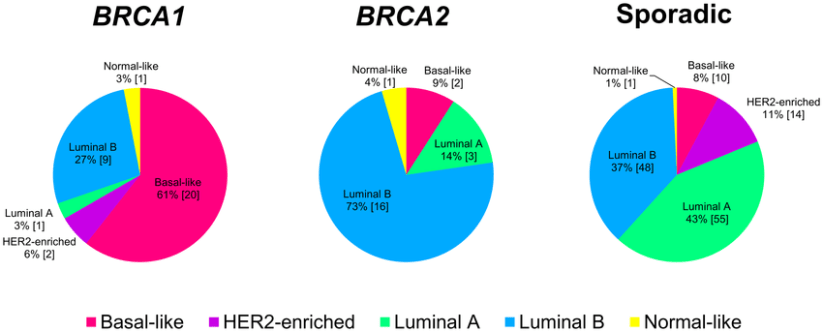
High-grade estrogen-receptor-positive (ER+), progesterone-receptor positive (PR+), HER2-negative breast cancers (luminal type).
-
-
Rodrigo Arrangoiz MS, MD, FACS a surgical oncologist and is a member of Sociedad Quirúrgica S.C at the America British Cowdray Medical Center in Mexico City:
-
He is an expert in the management of breast cancer.
- If you have any questions about hereditary breast cancer please fill free to contact Dr. Arrangoiz.


 Rodrigo Arrangoiz MS, MD, FACS, FSSO