
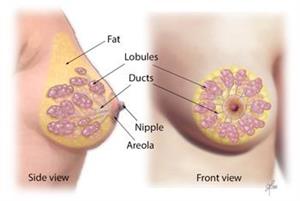
-
Sentinel lymph node biopsy (SLNB) has replaced axillary lymph node dissection (ALND) for the staging of clinically node-negative breast cancer patients, demonstrating equivalent survival to ALND for lymph node–negative patients while resulting in reduced morbidity.
-
For the majority of patients with pathologically positive SLNs, completion ALND was recommended by the American Society of Clinical Oncology Guidelines and the National Comprehensive Cancer Network (NCCN):
-
However, based on data from the American College of Surgeons Oncology Group (ACOSOG) Z0011 trial these guidelines have changed:
-
ALND may be omitted in selected patients with 1 or 2 positive SLNs.
-
-
-
-
The ACOSOG Z0011 trial:
-
813 patients
-
Clinical T1 to T2 node-negative tumors (N0) who were found to have hematoxylin and eosin (H&E)-positive SLNs were randomized to ALND vs no further axillary surgery:
-
Patients with palpable lymph nodes or clinical T3 tumors were not eligible for this study.
-
-
The protocol mandated the use of standard whole-breast radiation without an axillary field.
-
Patients with > 3 positive SLNs were excluded from the study.
-
The trial was closed early due to poor accrual with an enrollment of only 47% of the targeted 1900 patients.
-
It still showed equivalent results between the two treatment arms for loco-regional failure and survival.:
-
At 6.3 years’ follow-up, no differences were found between the two groups in the rates of:
-
Axillary recurrence:
-
0.5% vs 0.9%
-
-
In-breast recurrence:
-
3.6% vs 1.9%
-
-
Overall locoregional recurrence:
-
4.1% vs 2.8% (P = 0.53)
-
-
-
Disease-free were similar:
-
82.2% vs 83.8%
-
-
Overall survival were similar:
-
91.9% vs 92.5%
-
-
-
The majority of women in this trial were:
-
Older than 50 years (64%)
-
Had clinical T1 tumors (68%)
-
Had ER-positive tumors (77%)
-
Had only one positive SLN (60%),
-
Received whole-breast radiation (89%)
-
Received systemic therapy (96%: 58% adjuvant chemotherapy and 46% adjuvant hormonal therapy).
-
-
Forty percent of patients had micrometastases or isolated tumor cells and 60% had macrometastases in the sentinel nodes.
-
Additional positive axillary nodes were found in 27.3% of the ALND patients.
-
This study excluded patients:
-
Undergoing mastectomy
-
Patients receiving neoadjuvant chemotherapy.
-
-
-
The results from ACOSOG Z0011 were practice changing and ALND is no longer the standard of care for patients who meet all of the following criteria:
-
T1 to T2 tumors
-
One to two positive SLNs without extracapsular extension
-
Patient acceptance and completion of whole-breast radiation therapy without extended fields of therapy
-
Patient acceptance and completion of adjuvant therapy (hormonal, cytotoxic, or both)
-
-
The results from ACOSOG Z0011 are not directly applicable to patients who:
-
Have T3 tumors
-
Have more than 2 positive nodes
-
Are undergoing mastectomy
-
Are undergoing partial breast radiation
-
Have been identified as having matted axillary nodes or preoperative palpable nodes
-
Are receiving neoadjuvant chemotherapy
-
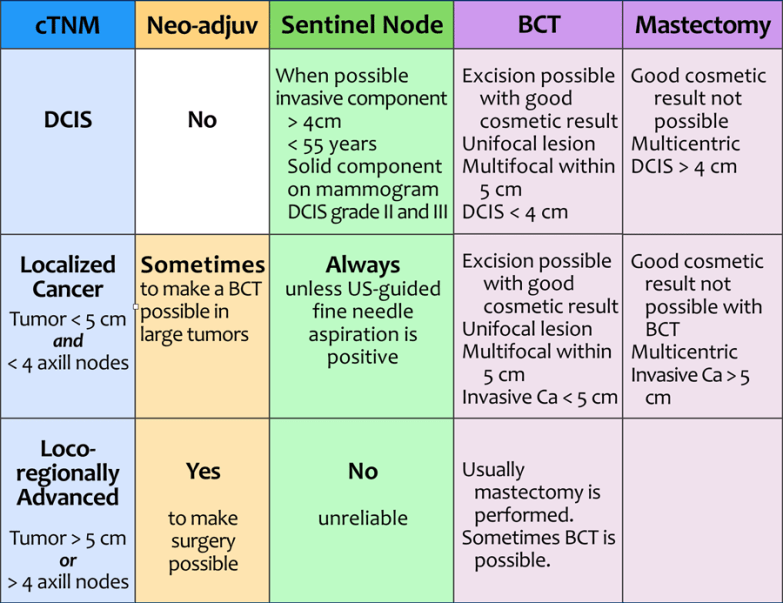
Rodrigo Arrangoiz MS, MD, FACS a surgical oncologist and is a member of Sociedad Quirúrgica S.C at the America British CowdrayMedical Center in Mexico City:
-
He is an expert in the management of breast cancer:
-
If you have any questions about breast cancer AND the management of the axilla in patients with invasive cancer Dr. Arrangoiz
-


 Rodrigo Arrangoiz MS, MD, FACS, FSSO