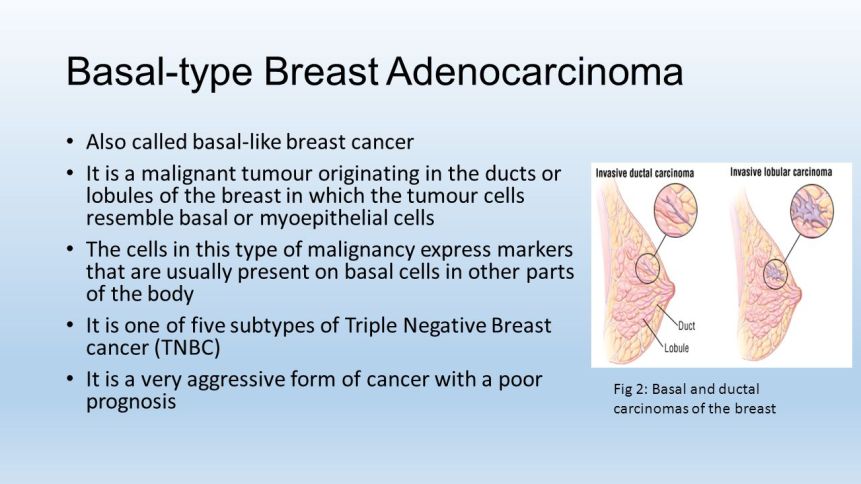
Basal-like Breast Cancers

  • Global gene expression analyses using high-throughput technologies have established five breast cancer intrinsic subtypes:

    • Luminal A

    • Luminal B

    • HER2-enriched

    • Claudin-low

    • Basal-like

    • Normal breast-like group

slide_4

  • There is no internationally accepted definition for basal-like breast cancers:

    • Some have used microarray-based expression profiling while others have used immunohistochemical markers as surrogates:

      • Immunohistochemical marker panels that have been proposed include:

        • Lack of estrogen receptor (ER), progesterone receptor (PR), and human epidermal growth factor receptor (HER2) expression or triple-negative phenotype:

          • Triple-negative breast cancers have been defined as tumors that are devoid of the expression of estrogen receptor (ER), progesterone receptor (PR), and HER2.

        • Expression of one or more cytokeratins (CK5/6, CK14, and CK17)

        • A combination of a lack of expression of ER, and/or PR, and HER2 with expression of CK5/6 and/or epidermal growth factor receptor.

    • Basal-like tumors, which account for approximately 15% of breast cancers  (12% to 17%) have a distinct clinical presentation and response to chemotherapy and tend to be more aggressive than other subtypes.

    • They are found in younger women, in African American women, and tend to present as interval cancers.

    • They cannot be solely defined by their immunohistochemical characteristics though as not all triple-negative tumors will be basal like:

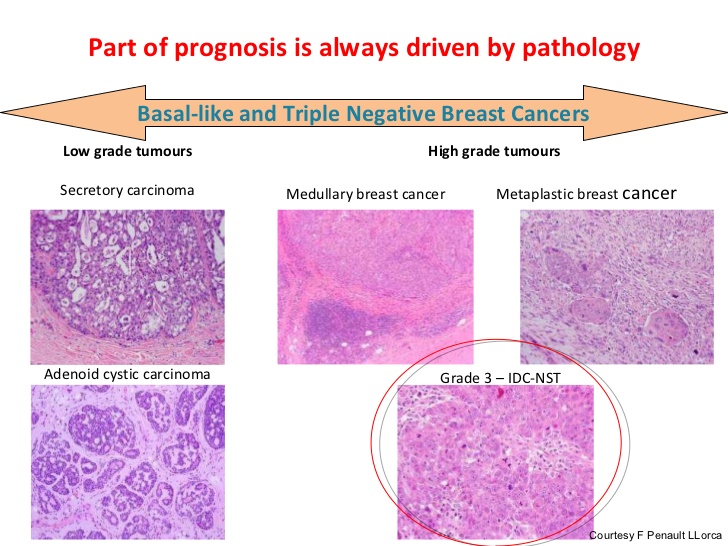
      • In fact, medullary and adenoid cystic cancers tend to be triple negative but are actually indolent, slow growing tumors with very good prognoses.

      • Studies show that 57% of triple-negative breast cancers are basal-like as are nearly 30% of HER2-enriched tumors.

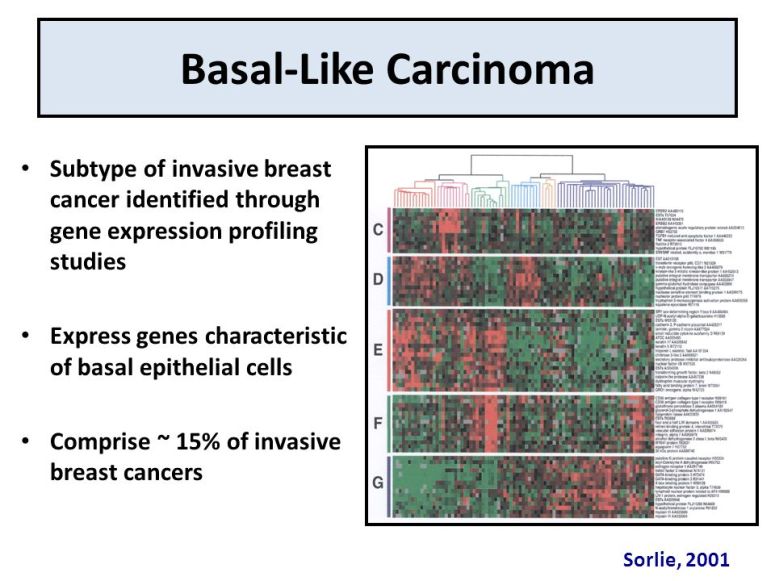
Basal-Like+Carcinoma+Subtype+of+invasive+breast+cancer+identified+through+gene+expression+profiling+studies.

  • Although broad generalizations can be made regarding the tumor subtype using immunohistochemical markers, these generalizations may not be entirely accurate for the whole tumor subtype:

    • For example, approximately 87% of luminal A tumors and 72% of luminal B tumors demonstrate an ER-positive/HER2-negative phenotype.

    • Interestingly, 7% to 8% of the luminal A and luminal B molecular tumors are negative for ER expression by immunohistochemistry.

    • Also, luminal B tumors can show an ER-positive/HER2-positive phenotype in 20% of cases and nearly 34% of the HER2-enriched molecular class is negative for HER2 expression by immunohistochemistry or fluorescence in situ hybridization.

  • Although discrepancies between immunohistochemistry and microarray of tumor genomic profiling exist we currently lack enough data to treat on microarray features alone:

    • In general, treatment decisions are still made based on immunohistochemistry characteristics.

mco-2011-slide-12-j-gligorov-spotlight-session-triple-negative-breast-cancer-an-overview-23-728

  • This category of breast cancer includes other molecular subtypes of breast cancers such as:

    • Claudin-low tumors which have cells with stem-cell like properties

    • Interferon-rich subgroup with better prognosis than the triple-negative breast cancers

    • Normal breast–like subgroup, with a disproportionate high numbers of stromal and normal cells

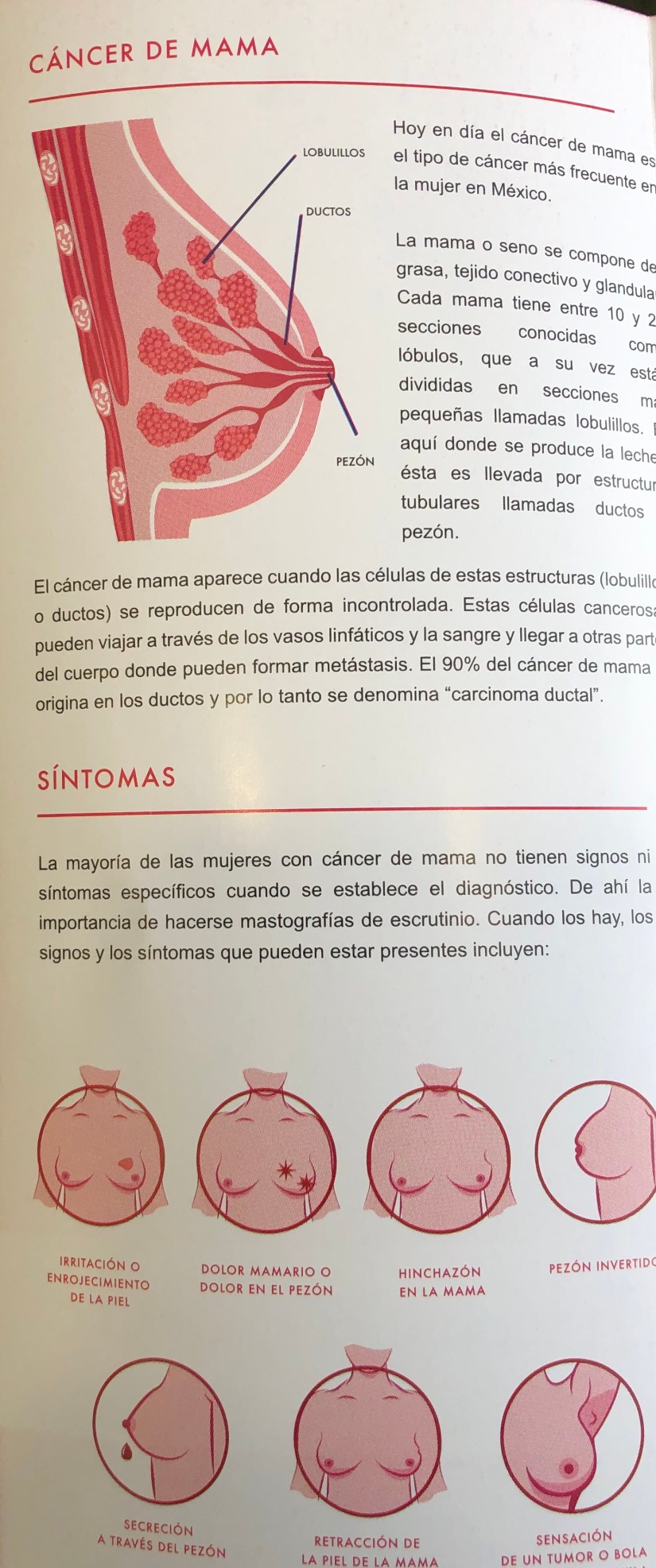
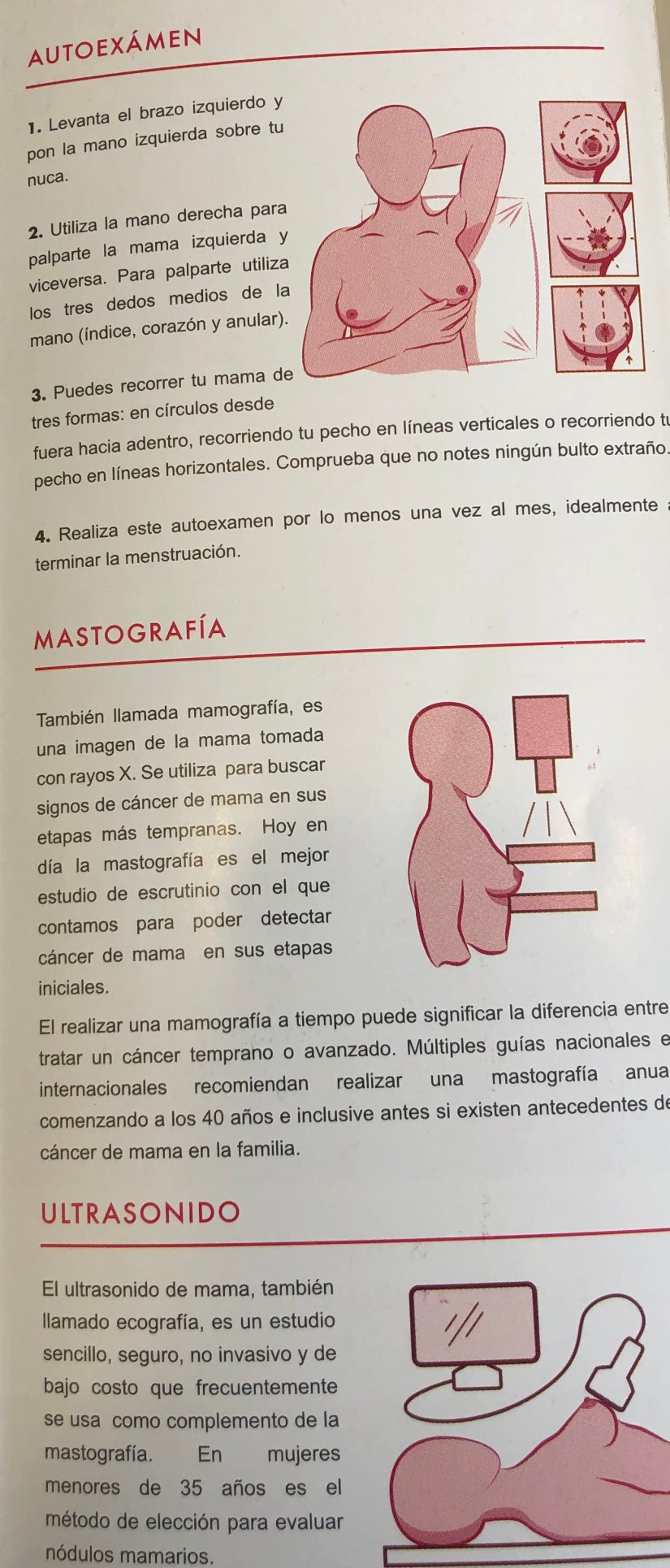
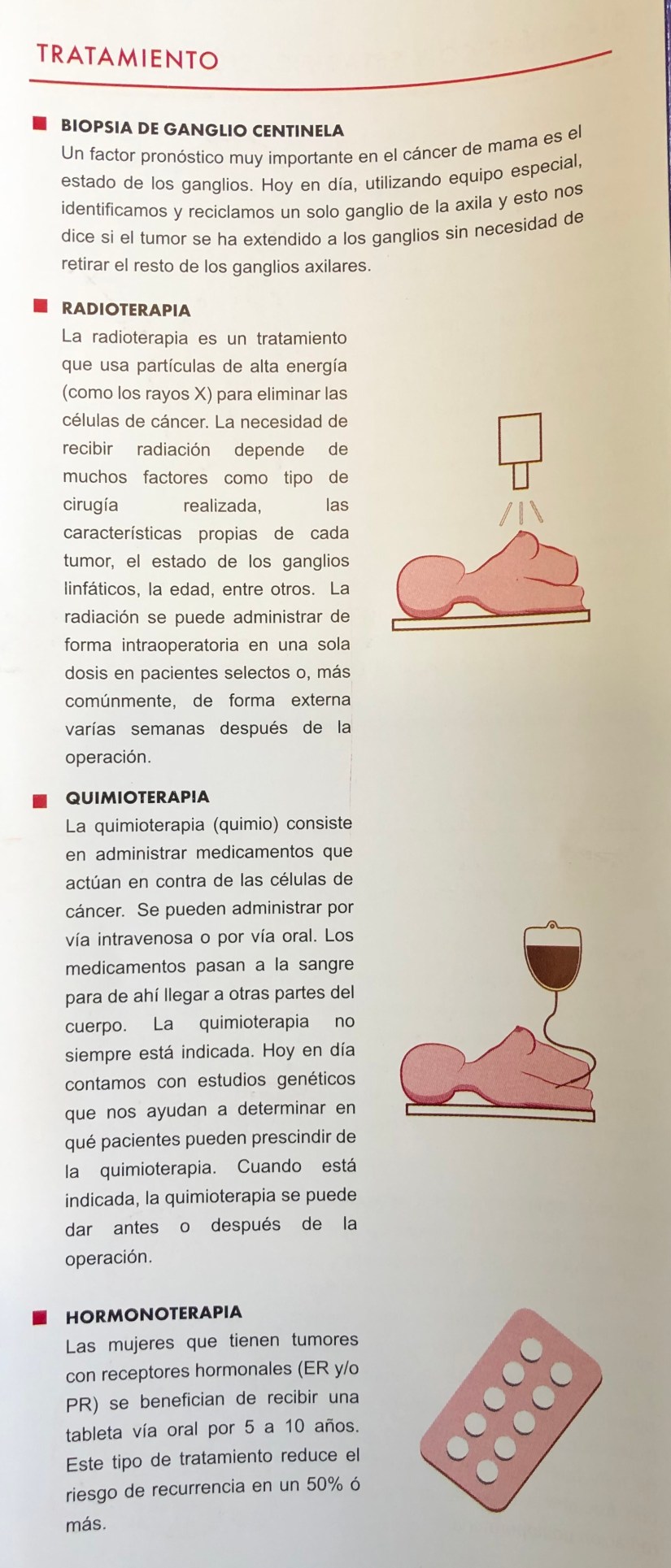
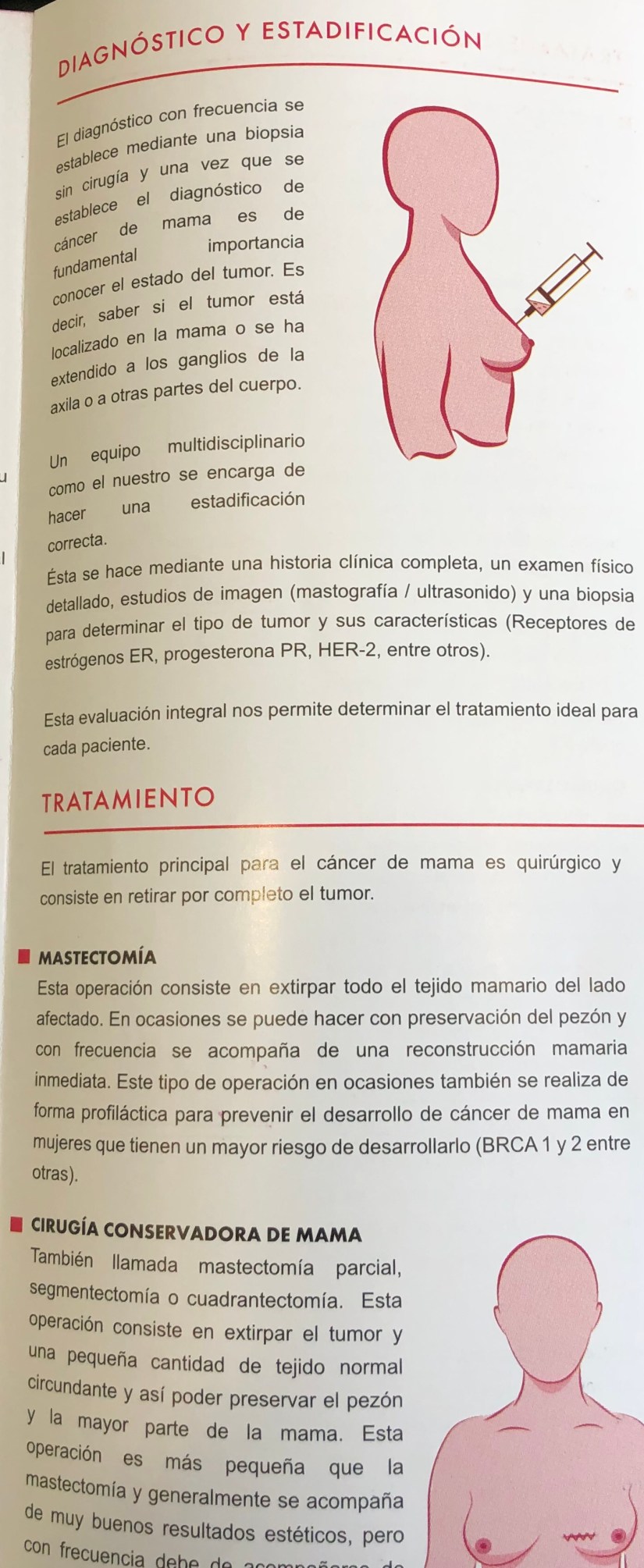
img_0832-2img_0833-2img_0834-2img_0836-2img_0835-2img_0837-2

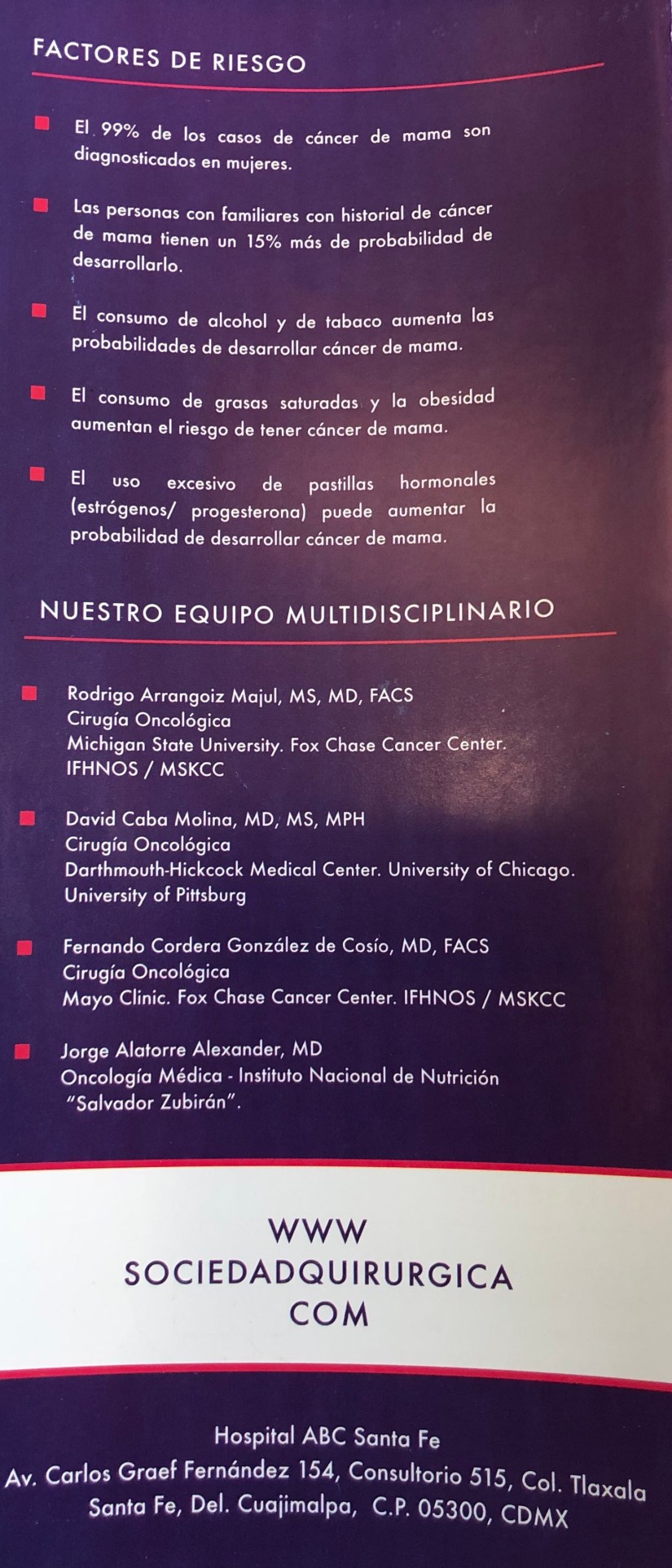
Rodrigo Arrangoiz MS, MD, FACS a surgical oncologist and is a member of Sociedad Quirúrgica S.C at the America British Cowdray Medical Center in Mexico City:

  • He is an expert in the management of breast cancer.

Training:

• General surgery:

• Michigan State University:

• 2004 al 2010

• Surgical Oncology / Head and Neck Surgery / Endocrine Surgery:

• Fox Chase Cancer Center (Filadelfia):

• 2010 al 2012

• Masters in Science (Clinical research for health professionals):

• Drexel University (Filadelfia):

• 2010 al 2012

• Surgical Oncology / Head and Neck Surgery / Endocrine Surgery:

• IFHNOS / Memorial Sloan Kettering Cancer Center:

• 2014 al 2016

Leave a comment