
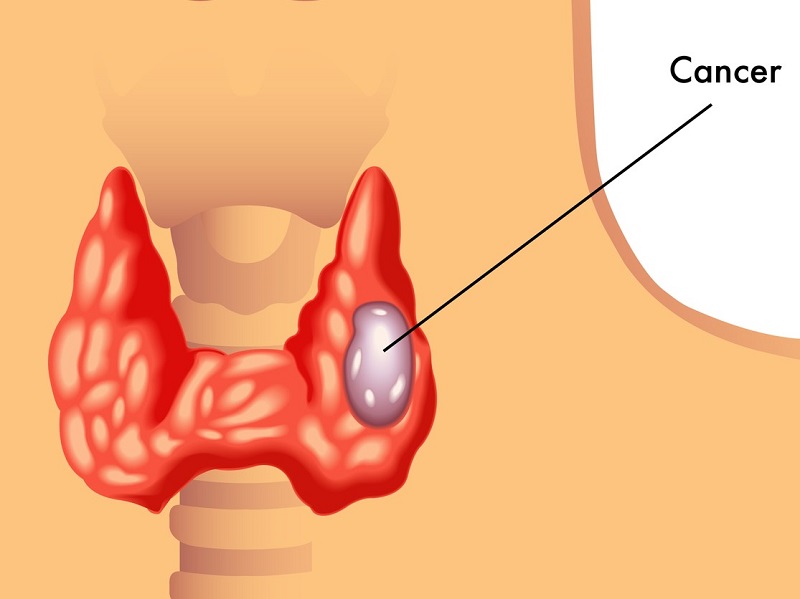
Introduction
-
Papillary cancers that are 10 mm or less in maximal diameter are called micro papillary cancers:
-
The World Health Organization (WHO) classification suggests the term be used for incidentally discovered lesions.
-
-
Previously these lesions were called occult papillary cancers, because they were primarily incidental findings at autopsy or following thyroidectomy:
-
However, technological improvements in imaging have made the occult terminology obsolete, as micropapillary cancers are routinely imaged by high-resolution ultrasonography:
-
As a result, the detection of micro papillary cancers has reached epidemic proportions:
-
Accounting for 40% to 43% of the thyroid cancers excised
-
-
-
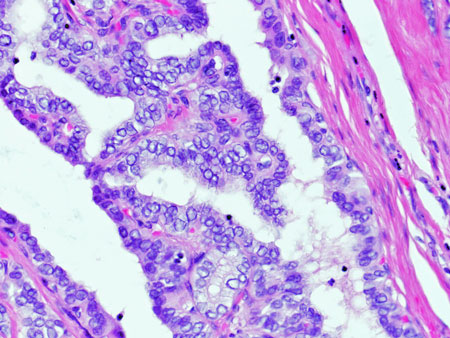
Prevelance
-
The high prevalence of micro papillary cancer has been appreciated from autopsy studies done decades prior to the emergence of high-resolution ultrasonography:
-
In the United States, these studies have shown up to a 13% prevalence of micro papillary cancer, whereas in other parts of the world substantially higher prevalence rates have been noted:
-
In Finland, the prevalence in one study was 36%.
-
-
The prevalence of micro papillary carcinoma in pathologic specimens is also highly dependent on how carefully one looks for it:
-
In one Spanish study, the initial prevalence based on grossly visible lesions was 5.3%, but when each thyroid was cut into blocks and carefully examined histologically:
-
The prevalence increased to 22%.
-
-
-
-
The prevalence of micro papillary carcinoma in some series was independent of age:
-
In Sweden the prevalence was approximately 7% for patients under age 50 or over age 80, and in Wisconsin in the United States the prevalence was 3% in an autopsy study of young adults.
-
-
Micro papillary carcinoma is frequently an incidental finding at the time of thyroid surgery and has been reported in 2% to 24% of surgical specimens.
Rodrigo Arrangoiz MS, MD, FACS a head and neck surgeon and is a member of Sociedad Quirúrgica S.C at the America British Cowdray Medical Center in Mexico City.
Training:
• General surgery:
• Michigan State University:
• 2004 al 2010

• Surgical Oncology / Head and Neck Surgery / Endocrine Surgery:
• Fox Chase Cancer Center (Filadelfia):
• 2010 al 2012

• Masters in Science (Clinical research for health professionals):
• Drexel University (Filadelfia):
• 2010 al 2012

• Surgical Oncology / Head and Neck Surgery / Endocrine Surgery:
• IFHNOS / Memorial Sloan Kettering Cancer Center:
• 2014 al 2016

http://www.cirugiatiroides.com
#Arrangoiz #HeadandNeckSurgery #EndocrineSurgery #SurgicalOncology #ThyroidSurgery #ThyroidCancerExpert #CirugiadeTumoresdeCabezayCuello #CirugiaEndocrina #CirugiadeTiroides #ExpertoenCancerdeTiroides

 Rodrigo Arrangoiz MS, MD, FACS, FSSO